The Giant Buddhas & Love Story
by Daniel Hui
My hand seems to be extraordinarily unlucky this year - the films dealt to me this SIFF were largely either completely uninteresting or excruciatingly awful. So I made up my mind on Sunday to go with the flow, ie, if the first film was good I'd go for the second one, if the second one was good I'd go for the next, and so on... The first film I saw that day was The Giant Buddhas, which, thankfully, was finally a movie I could love after a string of eight stinkers (yes, eight!), but my lucky streak stopped at second (Singapore's Love Story), which petered out my day.
Kelvin Tong's return to the big screen after barely a year (the horror movie The Maid (2005), which I quite enjoyed) is the Andy Lau-financed Love Story, an elliptical maze of meaningless quotes designed to ensnare you in its frustrating web and make you pray for a mercifully quick death. I haven't seen a single film in Andy Lau's Focus First Cut Series, but I can't see how having Andy Lau's (a bland singer and wooden actor) name attached to the project could give it any indication of quality. With commercial values (read: entertainment) strictly absent, Kelvin Tong has created another piece of arthouse turd that could only be interesting to high-minded literati who cream in their pants thinking of how they could elocute its many 'themes,' 'parallels,' 'allusions,' 'intertextuality...' - a movie that takes itself so seriously in its metaphorical bullshit that it almost makes it seem like a crime to enjoy a movie. Its frequent use of pretentiously laughable intertitles attempts to align itself with Wong Kar-Wai (it even blatantly cops lines from Wong's earlier movies), upping its quotability and annoyingness but doing little to lift the film from repetitive tedium. What Kelvin Tong doesn't seem to get, most of all, is Wong's strength with actors - Love Story is filled with badly miscast pretty faces struggling with secondary-school-poetry that is a mouthful to pronounce, like a college Last Year at Marienbad-wannabe dubbed in poor Mandarin by a ten-year-old kid.

While Kelvin Tong's strength as a filmmaker isn't in writing, it certainly isn't in direction. The Maid was enjoyable in spite of itself - its cast brought with them a rigor and energy that helped drive the film despite its tired Asian-horror cliches and flimsy (where's the) plot. He is right in saying in the post-film Q & A that Singaporean film also needs to have an adventurous, experimental side. Unfortunately, with all his ambitions unbridled by the creative freedom Andy Lau gives to the series and without any talent to match, all he can come up with is faux-arthouse mumbo jumbo that seems typical of an insufferable local experimental Chinese play.
What Love Story lacks most of all is any indication of real emotion, leaving this black hole of a film adrift in its lofty cloud castles while the world rotates on by. It seems incomprehensible to me that a filmmaker would invest any amount of time and money for a project he doesn't seem to care much about - none of his characters seem remotely human enough to pull off the weird-sounding lines that seem to have come out from a computerized word-hat. Making this total disinterest in reality more painful is the fact that he chooses to suspend the film in a pseudo setting completely decontextualized from Singapore. This theme is, perhaps, something he wanted to play with of course, but looking at it from a similarly disinterested point of view, disinterested filmmaking only invests disinterestedness from an audience who simply can't give a shit for a film that can't give a shit about anything other than itself.
Christian Frei's Giant Buddhas, on the other hand, uses the documentary form as a journal - what comes out is a deeply heartfelt take on the futility of situations. Using the destruction of the Bamiyan Buddhas in Afghanistan as a starting point, the camera ruminates and meanders all around the world on its subject, with Frei filling the narration with his own ponderings, turning what could potentially be a documentary charged with angst and fury into a mournful, and often lyrical elegy of the world's failures - it gives me the feeling of looking at an old photograph of better times and romantically imagining how things could've been better if they had stayed the same, the kind of nostalgia that can only come with a perhaps foolish, and wistful obsession with the impossibility of the past.
As is all our initial reactions to the destruction, Frei starts of with an agenda to kill, and a subject like this could easily fall into an indictment of the persons to blame. He seems to recognize early on, though, that the real culprit - as in every issue, if one really sits down - is always elusive, though it is always easy to find the immediate person at hand. The Taliban behind the destruction would be the easiest to blame, but was it really the West's indifference to Afghanistan's problems (the Swiss offered millions of dollars as aid to restore the Buddhas, but refused when the Afghani government requested for this to be used on the starving children instead) that caused the destruction of the Buddhas? Could it be the West's ignorance and blind terror at Muslims that caused the Taliban to react in an extreme manner to show the world what it was capable of? Frei asks these questions not without a sense of lament, as hapless and desperate as a man forced to see events play out with his hands tied behind his back - which is the only way we could make any sense out of history; the common mantra of studying to not let history repeat itself nothing but a sad fallacy.
This approach is not new, more recently Syriana achieved the same effect within the realms of fiction (which, people seem to be able to accept more readily, maybe because it is more distanced). And like its fictional counterpart, Giant Buddhas succeeds too, when it finds its views in the lives of its protagonists - their hopes, their glories and how much the Buddhas had meant to them before they were destroyed. Editing it and adopting a macro view, Frei gives us a sense of omniscience, but a sad one at that, because knowledge also makes us that much more pessimistic at the world never being able to correct its own problems; the insight only shows us how deeply entrenched into its own mistakes the world is, an ever-tangling web of unsolvable intricacies that makes any one solution impossible (or, as shown in the film, even laughable) and potentially damaging; he shows us the world as it is, driven on a machination doomed to its own destruction.
This destruction is shown not only in the physical sense (as in the pulverizing of the Buddhas) but also in the people's lives, their culture and past. The film shows the preservation of the Chinese national treasures by the Chinese government (though their motives are not far from mercenary) and sighs that some cultures are more privileged than others when they have their history to keep. It makes me reflect somewhat on modern Singapore, its landscape whitewashed with barely a hint of its past in its 80's mad rush to modernize and develop. How Singaporeans walk about each day embracing the future and taking not one nostalgic look at the past, our collective culture one huge blank erased by the money-making industry - the reverse of China's money-driven tourist industry. Looking at that and looking at the artificial world Kelvin Tong has created in Love Story and how he attempts to ditch the old (or the real and tangible) in search of something new makes me sigh.

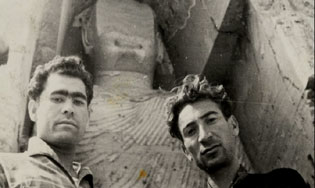
Eventually, and spoilers ensue from here, the film moves towards an ending that forgoes its documentary form, yet is even more moving precisely because it's contained within a documentary. We follow Nelofor Pazari, the beautiful Afghani actress exiled in Canada and heart of the film, who journeys back to Afghanistan to reclaim some of her memories and search for the Buddhas which her father had posed with in an enigmatic photo, as she finds that her homeland has been completely disfigured from what now only exists in her memories. She goes to where the Buddhas once stood and sees the big empty hole that the world has left behind, an ugly scar dented forever in history. Then suddenly the film veers into magical realism and for a moment you believe what you see onscreen and you feel a sudden rush of elation with Pazari, and then reality hits home and you remember that it could only all just be a dream. As the camera pulls away from the landscape of Bamiyan Valley, so do I yearn to pull away, further and further from ineffectual reality, and into what can now only appear, in our dreams.

Kelvin Tong's return to the big screen after barely a year (the horror movie The Maid (2005), which I quite enjoyed) is the Andy Lau-financed Love Story, an elliptical maze of meaningless quotes designed to ensnare you in its frustrating web and make you pray for a mercifully quick death. I haven't seen a single film in Andy Lau's Focus First Cut Series, but I can't see how having Andy Lau's (a bland singer and wooden actor) name attached to the project could give it any indication of quality. With commercial values (read: entertainment) strictly absent, Kelvin Tong has created another piece of arthouse turd that could only be interesting to high-minded literati who cream in their pants thinking of how they could elocute its many 'themes,' 'parallels,' 'allusions,' 'intertextuality...' - a movie that takes itself so seriously in its metaphorical bullshit that it almost makes it seem like a crime to enjoy a movie. Its frequent use of pretentiously laughable intertitles attempts to align itself with Wong Kar-Wai (it even blatantly cops lines from Wong's earlier movies), upping its quotability and annoyingness but doing little to lift the film from repetitive tedium. What Kelvin Tong doesn't seem to get, most of all, is Wong's strength with actors - Love Story is filled with badly miscast pretty faces struggling with secondary-school-poetry that is a mouthful to pronounce, like a college Last Year at Marienbad-wannabe dubbed in poor Mandarin by a ten-year-old kid.
While Kelvin Tong's strength as a filmmaker isn't in writing, it certainly isn't in direction. The Maid was enjoyable in spite of itself - its cast brought with them a rigor and energy that helped drive the film despite its tired Asian-horror cliches and flimsy (where's the) plot. He is right in saying in the post-film Q & A that Singaporean film also needs to have an adventurous, experimental side. Unfortunately, with all his ambitions unbridled by the creative freedom Andy Lau gives to the series and without any talent to match, all he can come up with is faux-arthouse mumbo jumbo that seems typical of an insufferable local experimental Chinese play.
What Love Story lacks most of all is any indication of real emotion, leaving this black hole of a film adrift in its lofty cloud castles while the world rotates on by. It seems incomprehensible to me that a filmmaker would invest any amount of time and money for a project he doesn't seem to care much about - none of his characters seem remotely human enough to pull off the weird-sounding lines that seem to have come out from a computerized word-hat. Making this total disinterest in reality more painful is the fact that he chooses to suspend the film in a pseudo setting completely decontextualized from Singapore. This theme is, perhaps, something he wanted to play with of course, but looking at it from a similarly disinterested point of view, disinterested filmmaking only invests disinterestedness from an audience who simply can't give a shit for a film that can't give a shit about anything other than itself.
Christian Frei's Giant Buddhas, on the other hand, uses the documentary form as a journal - what comes out is a deeply heartfelt take on the futility of situations. Using the destruction of the Bamiyan Buddhas in Afghanistan as a starting point, the camera ruminates and meanders all around the world on its subject, with Frei filling the narration with his own ponderings, turning what could potentially be a documentary charged with angst and fury into a mournful, and often lyrical elegy of the world's failures - it gives me the feeling of looking at an old photograph of better times and romantically imagining how things could've been better if they had stayed the same, the kind of nostalgia that can only come with a perhaps foolish, and wistful obsession with the impossibility of the past.
As is all our initial reactions to the destruction, Frei starts of with an agenda to kill, and a subject like this could easily fall into an indictment of the persons to blame. He seems to recognize early on, though, that the real culprit - as in every issue, if one really sits down - is always elusive, though it is always easy to find the immediate person at hand. The Taliban behind the destruction would be the easiest to blame, but was it really the West's indifference to Afghanistan's problems (the Swiss offered millions of dollars as aid to restore the Buddhas, but refused when the Afghani government requested for this to be used on the starving children instead) that caused the destruction of the Buddhas? Could it be the West's ignorance and blind terror at Muslims that caused the Taliban to react in an extreme manner to show the world what it was capable of? Frei asks these questions not without a sense of lament, as hapless and desperate as a man forced to see events play out with his hands tied behind his back - which is the only way we could make any sense out of history; the common mantra of studying to not let history repeat itself nothing but a sad fallacy.
This approach is not new, more recently Syriana achieved the same effect within the realms of fiction (which, people seem to be able to accept more readily, maybe because it is more distanced). And like its fictional counterpart, Giant Buddhas succeeds too, when it finds its views in the lives of its protagonists - their hopes, their glories and how much the Buddhas had meant to them before they were destroyed. Editing it and adopting a macro view, Frei gives us a sense of omniscience, but a sad one at that, because knowledge also makes us that much more pessimistic at the world never being able to correct its own problems; the insight only shows us how deeply entrenched into its own mistakes the world is, an ever-tangling web of unsolvable intricacies that makes any one solution impossible (or, as shown in the film, even laughable) and potentially damaging; he shows us the world as it is, driven on a machination doomed to its own destruction.
This destruction is shown not only in the physical sense (as in the pulverizing of the Buddhas) but also in the people's lives, their culture and past. The film shows the preservation of the Chinese national treasures by the Chinese government (though their motives are not far from mercenary) and sighs that some cultures are more privileged than others when they have their history to keep. It makes me reflect somewhat on modern Singapore, its landscape whitewashed with barely a hint of its past in its 80's mad rush to modernize and develop. How Singaporeans walk about each day embracing the future and taking not one nostalgic look at the past, our collective culture one huge blank erased by the money-making industry - the reverse of China's money-driven tourist industry. Looking at that and looking at the artificial world Kelvin Tong has created in Love Story and how he attempts to ditch the old (or the real and tangible) in search of something new makes me sigh.
Eventually, and spoilers ensue from here, the film moves towards an ending that forgoes its documentary form, yet is even more moving precisely because it's contained within a documentary. We follow Nelofor Pazari, the beautiful Afghani actress exiled in Canada and heart of the film, who journeys back to Afghanistan to reclaim some of her memories and search for the Buddhas which her father had posed with in an enigmatic photo, as she finds that her homeland has been completely disfigured from what now only exists in her memories. She goes to where the Buddhas once stood and sees the big empty hole that the world has left behind, an ugly scar dented forever in history. Then suddenly the film veers into magical realism and for a moment you believe what you see onscreen and you feel a sudden rush of elation with Pazari, and then reality hits home and you remember that it could only all just be a dream. As the camera pulls away from the landscape of Bamiyan Valley, so do I yearn to pull away, further and further from ineffectual reality, and into what can now only appear, in our dreams.
Labels: christian frei, documentary, kelvin tong, siff, singaporean cinema
posted by Daniel Hui at 9:16 AM


0 Comments:
Post a Comment
<< Home